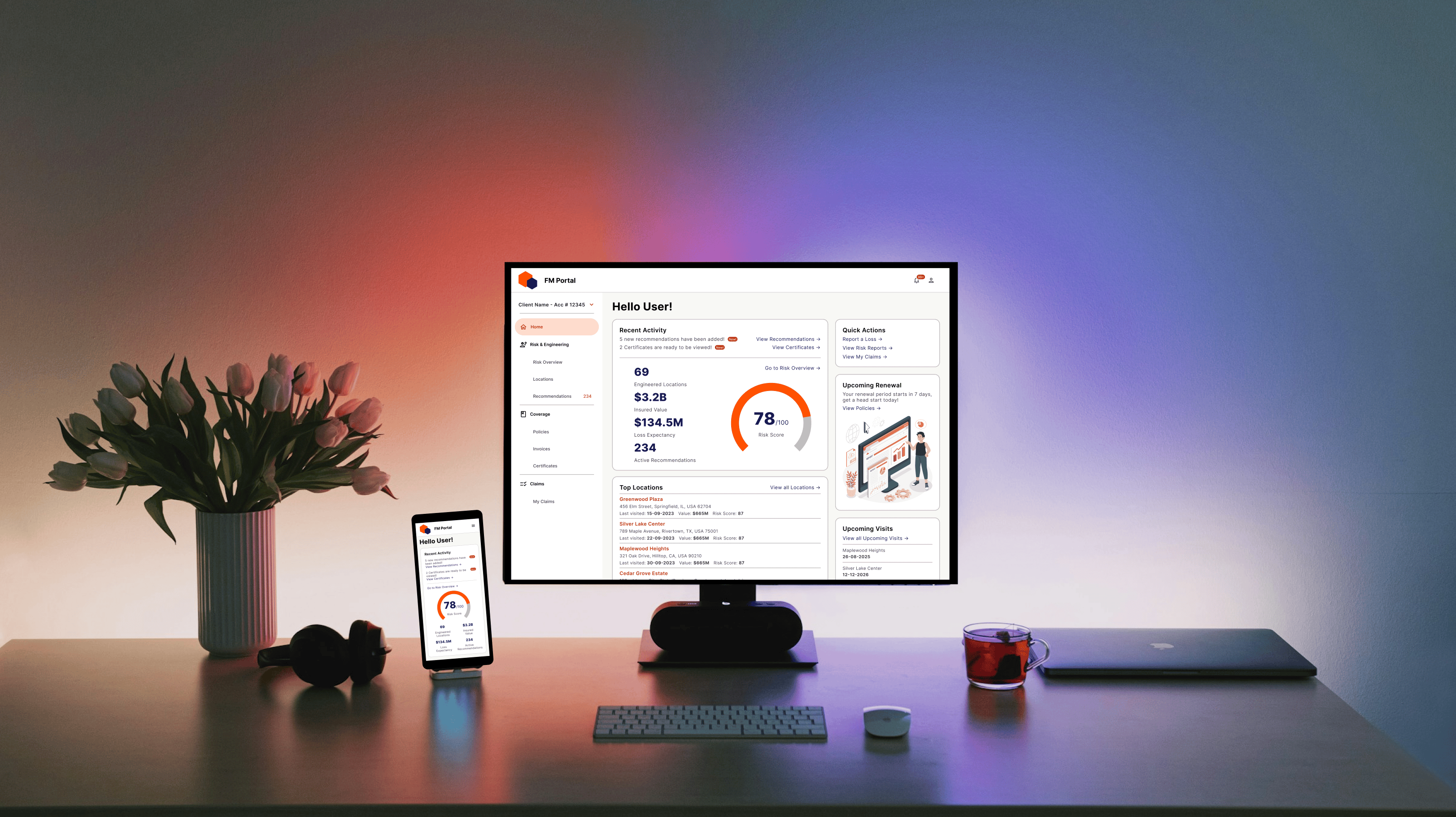
Client Portal
Empowering Clients Through Seamless Risk Management
Responsibilities
UX leadership, Vision Creation, Cross-Functional Alignment, Design Execution, System Thinking
Product
Enterprise platform enabling collaboration between clients and field engineers
Team
5 Designers
2 Researcher
8 Product teams
I led UX strategy and design for a secure client-facing portal that helps users track risk, manage claims, and collaborate with field engineers. This project aimed to reduce fragmented workflows and empower clients with real-time, self-service access to their risk data — improving satisfaction and operational efficiency.

Unclear Access to Risk Data
It’s unclear where to find risk data or task updates
Fragmented Communication Channels
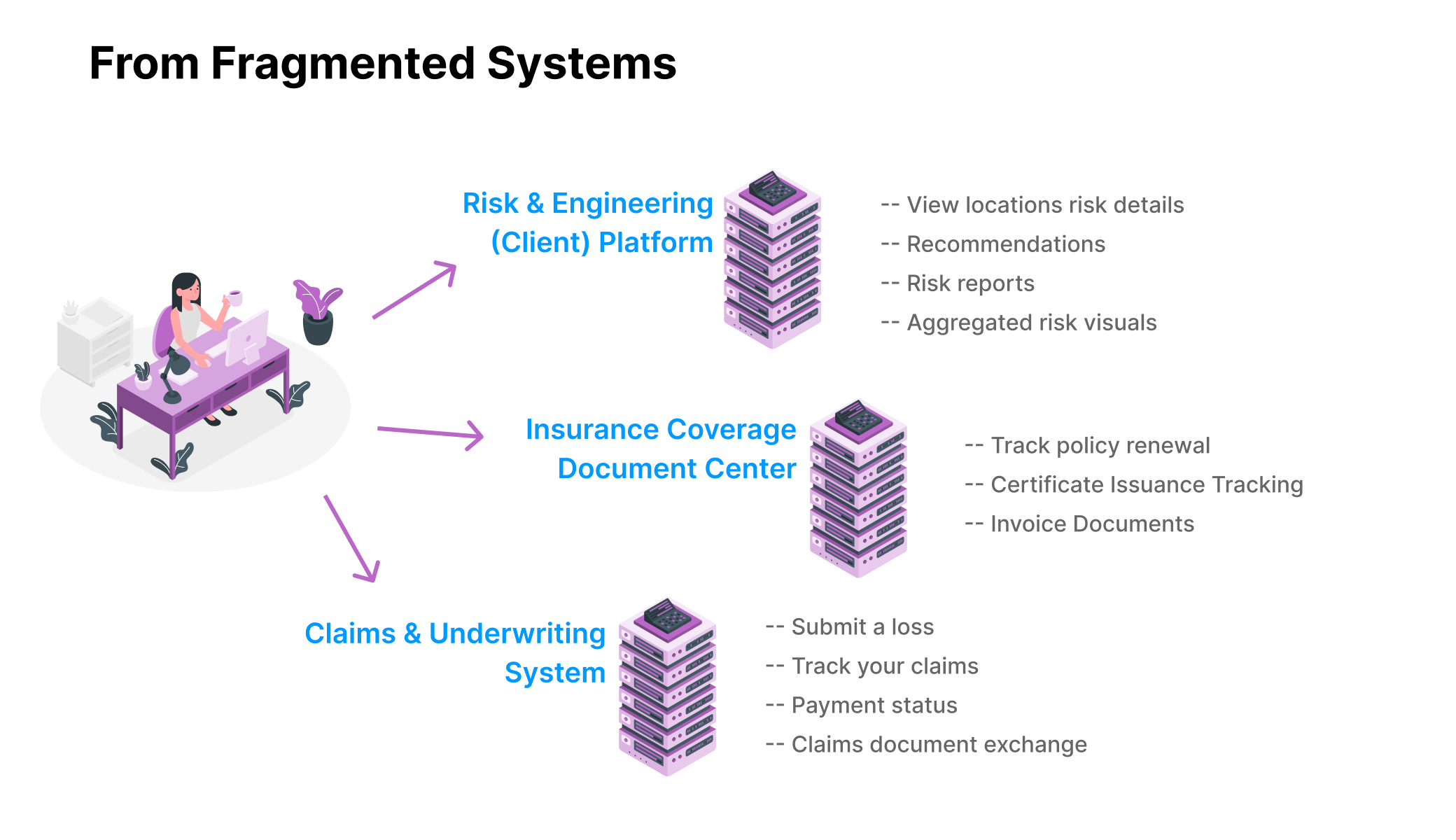
Communication is fragmented across emails, PDFs, and manual follow-ups

Lack of Collaboration & Visibility
There’s no easy way to track progress or collaborate with field engineers
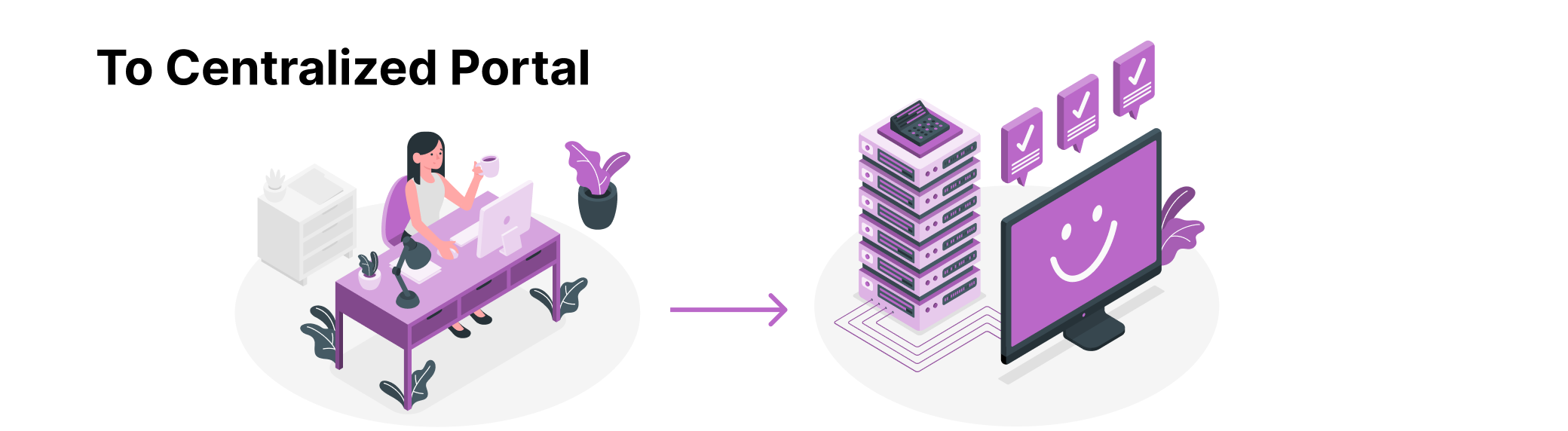
To kick off the effort, I was asked to define a product vision that could unite internal teams around solving these core experience gaps.
I led cross-functional workshops with product owners, field engineers, and client service leaders to align on the biggest friction points. We mapped user and business pain together, defined critical use cases, and prioritized where UX could drive the most value.
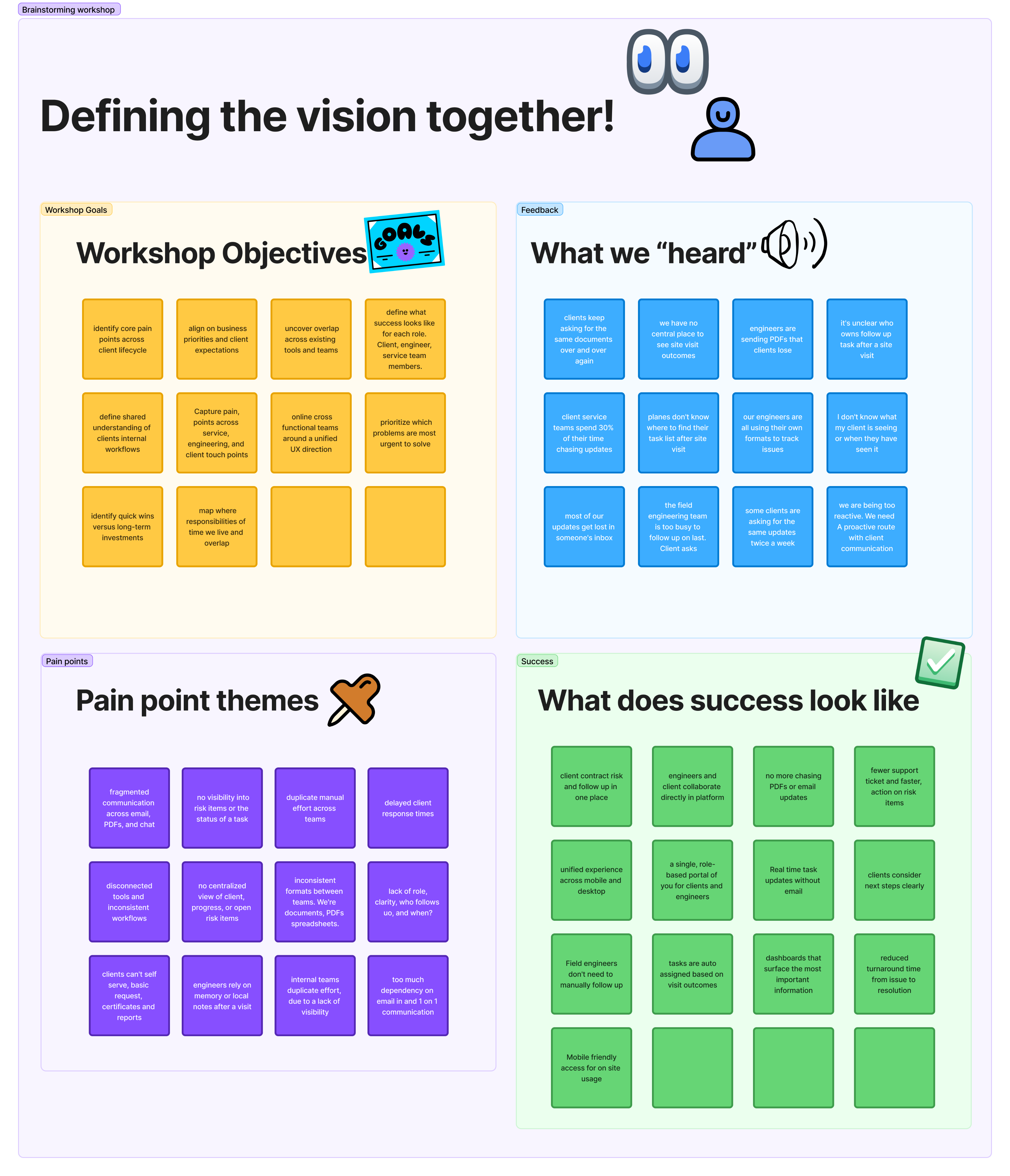
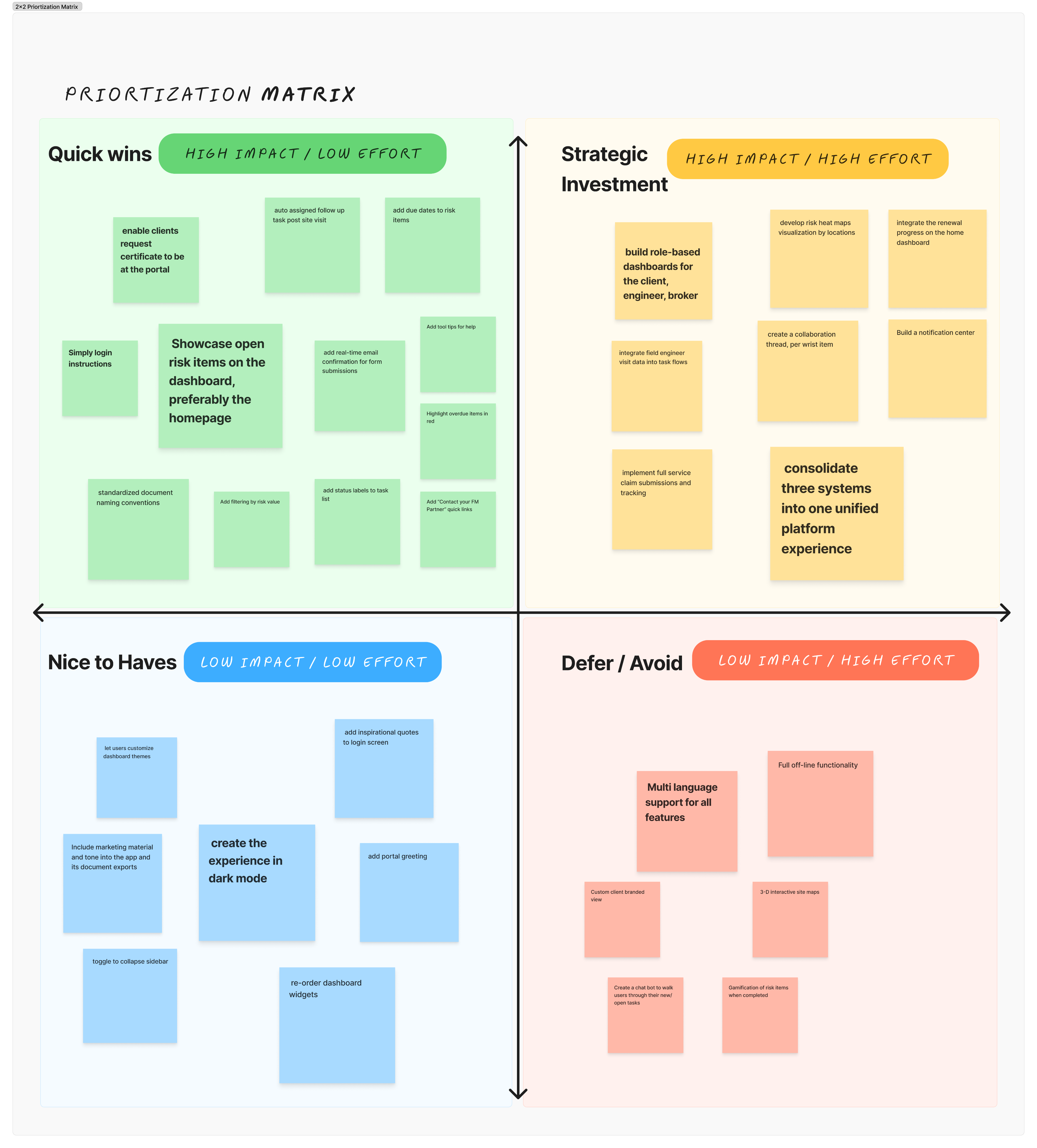
Once we had consensus on the vision, I worked with our research team to audit existing touchpoints — reports, claims, risk tracking, certificates, and identify where overlap, delays, and user drop-off were most common.
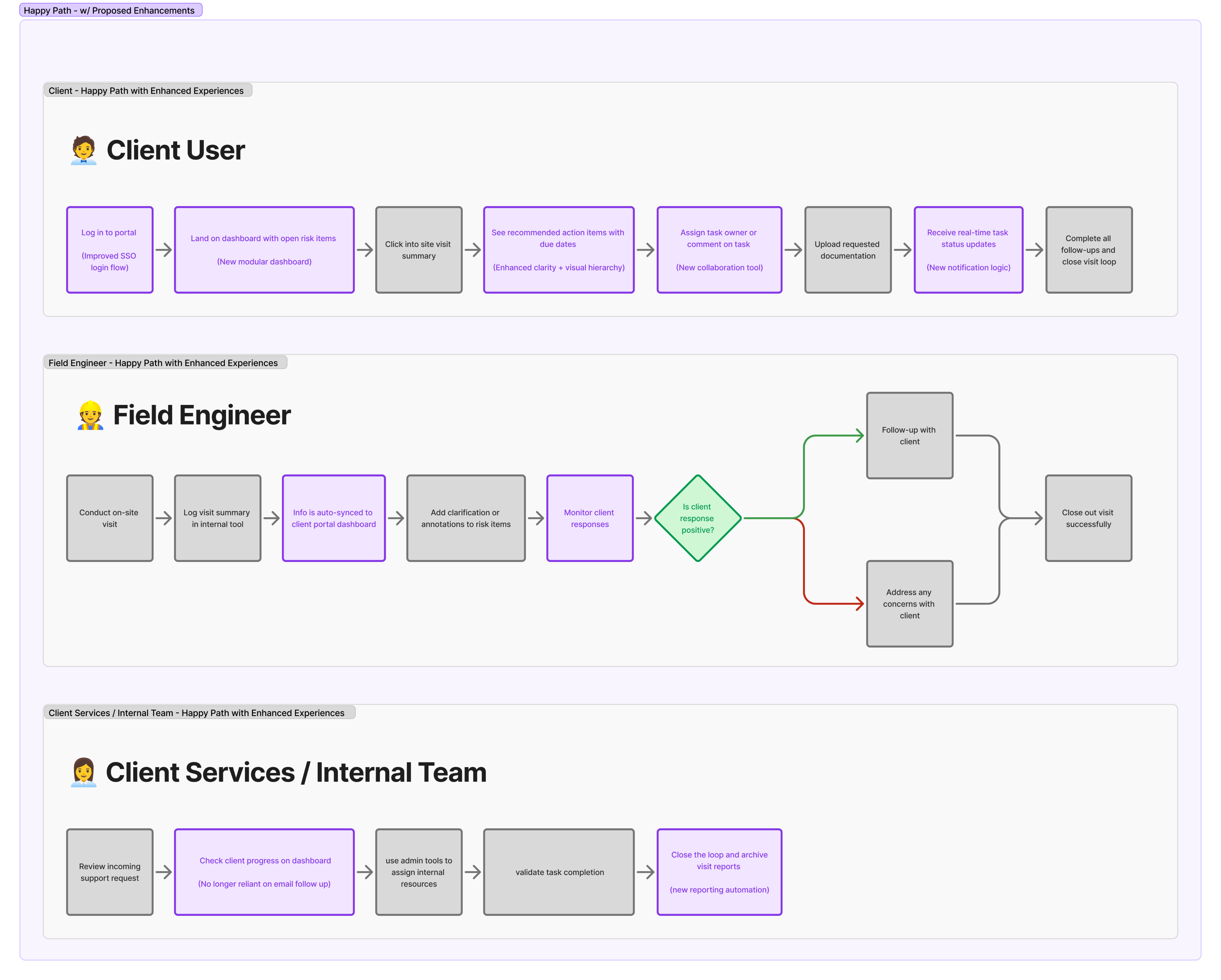
We discovered that several processes (like site visit follow-up or certificate access) existed across disconnected tools, lacked ownership visibility, and didn’t support real-time updates.

New/Enhanced actions

Current actions
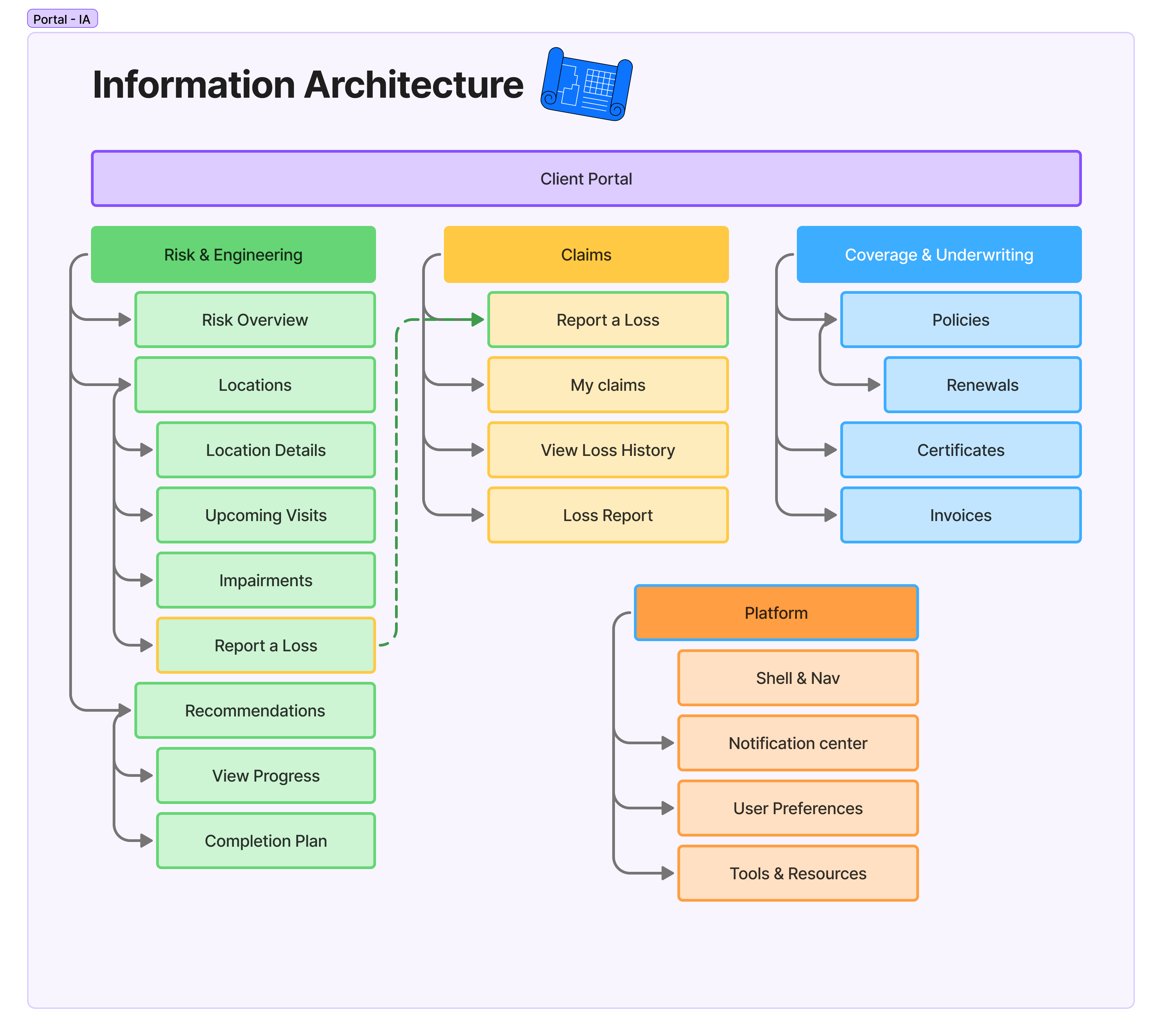
To bring clarity, I proposed a new, role-based information architecture that aligned tasks around user intent — not internal structure.
I consolidated workflows into a modular dashboard experience with persistent risk tracking, task assignment, and documentation exchange. I also worked closely with our research partner to test terminology and flow concepts through tree testing and pilot sessions.
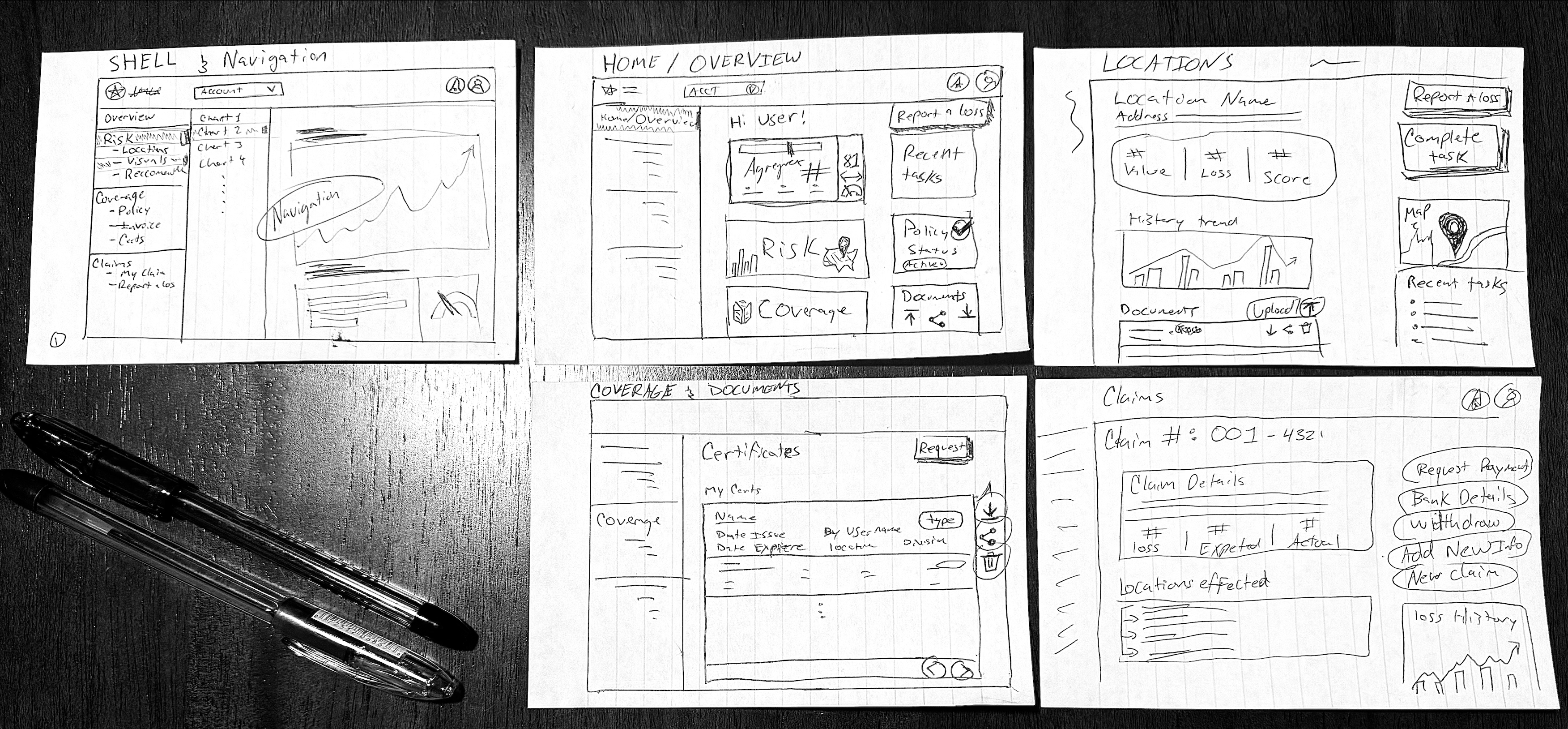
From there, I explored several layout and interaction patterns to support high-frequency tasks — from recommendation tracking to risk visualization.
I created interactive prototypes to evaluate layout hierarchy, notification styles, and mobile flexibility. Early concepts included a collapsible side panel for task switching, and an embedded chat thread for direct collaboration with engineers.
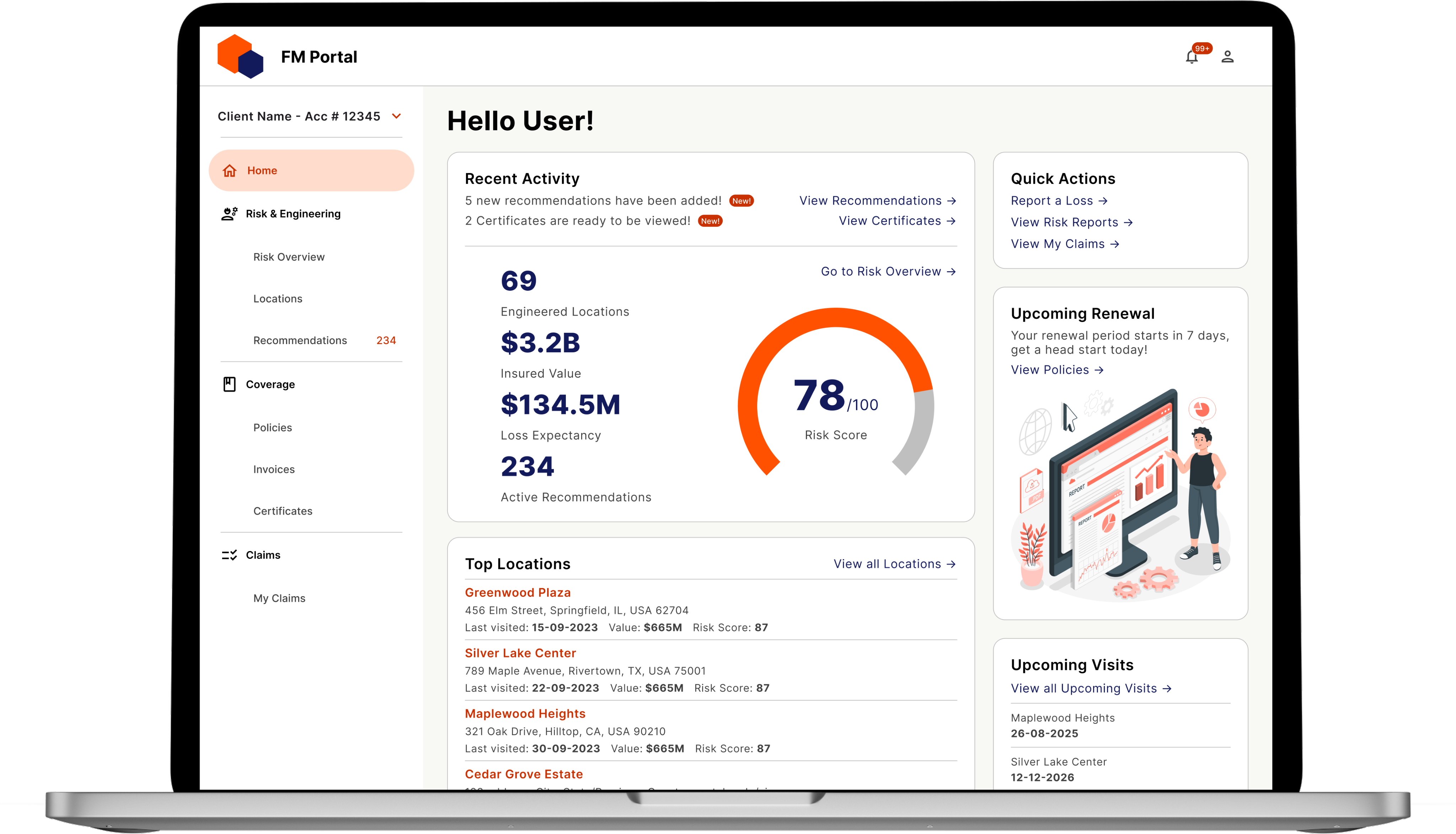
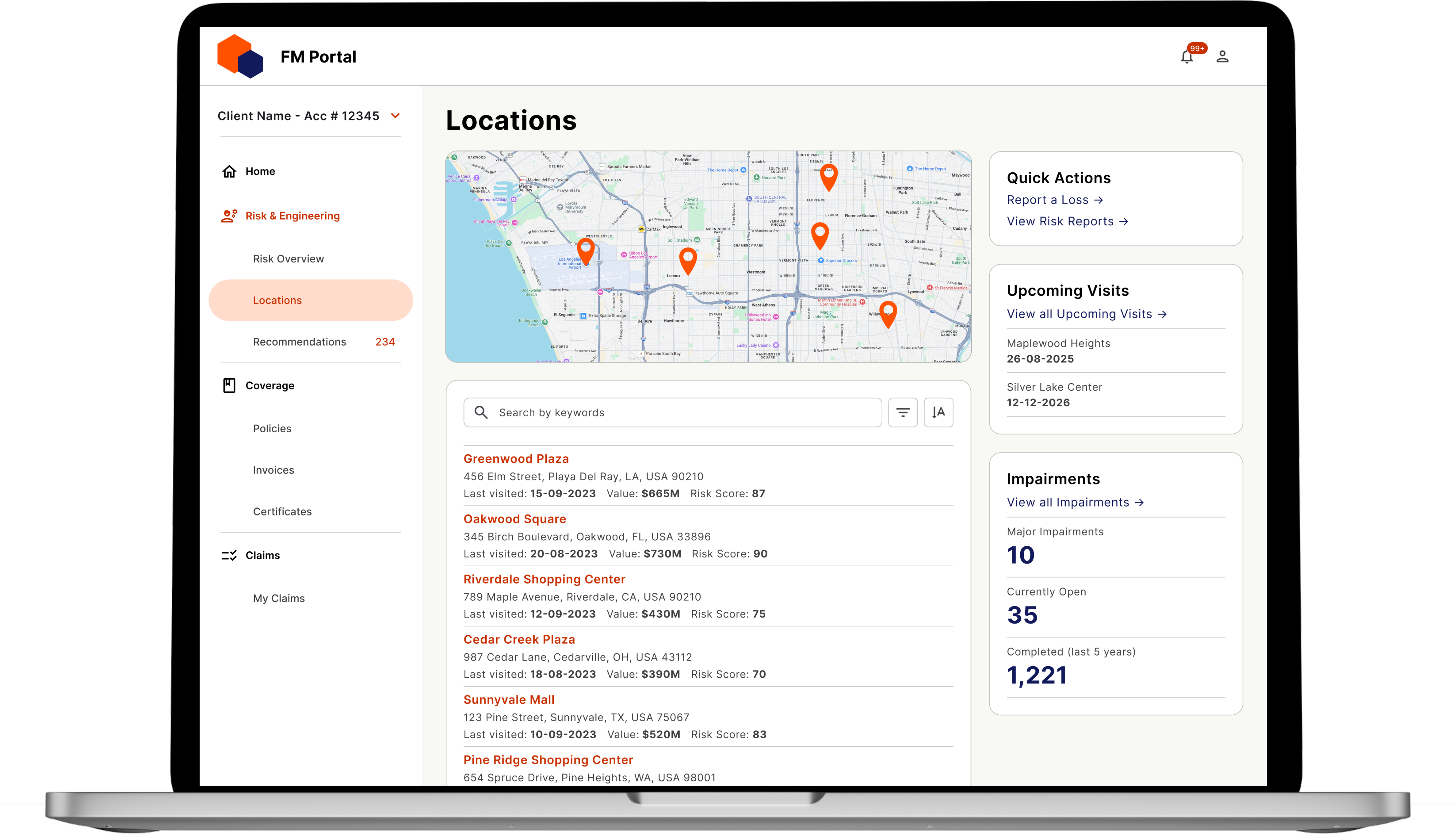
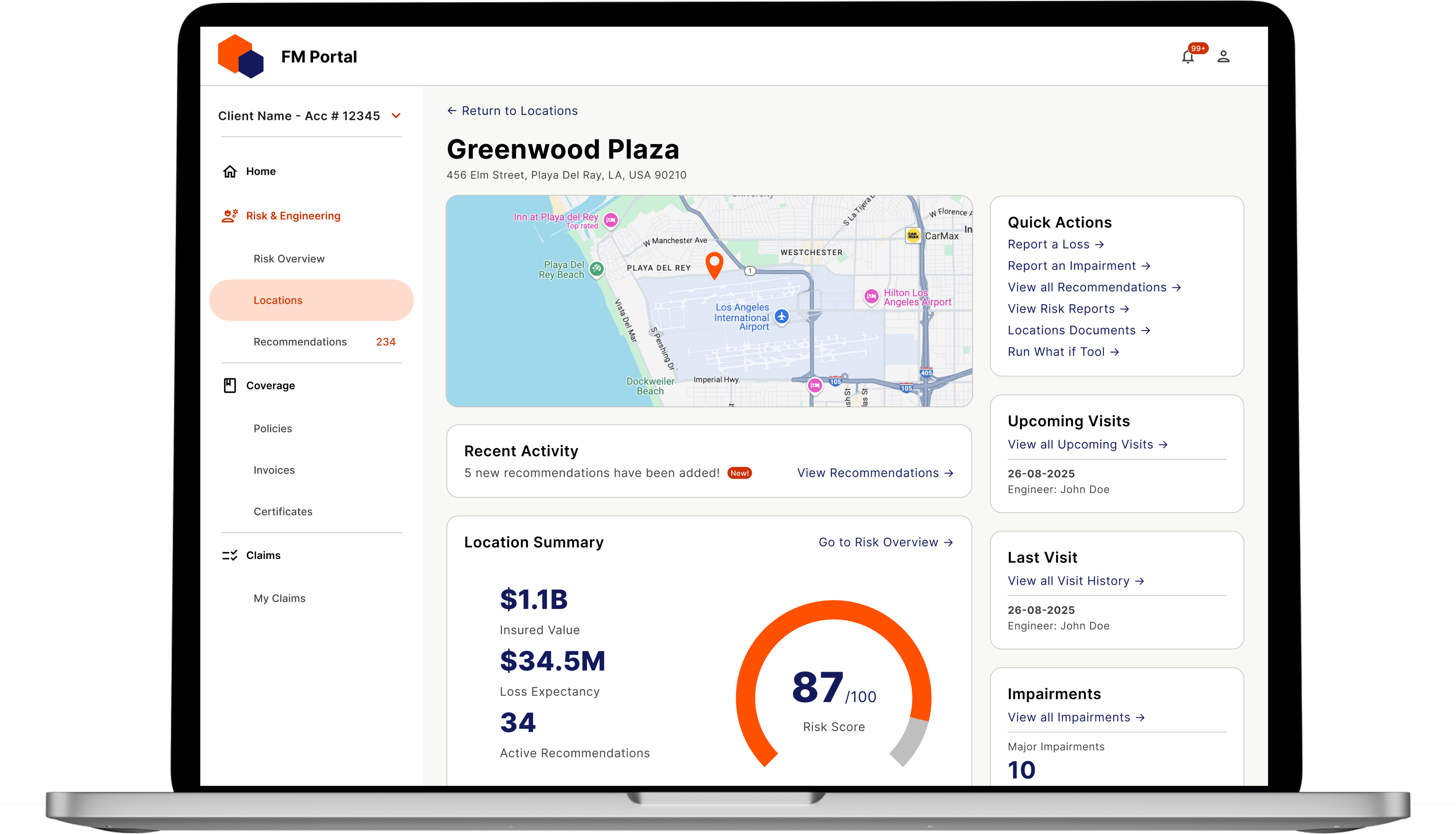
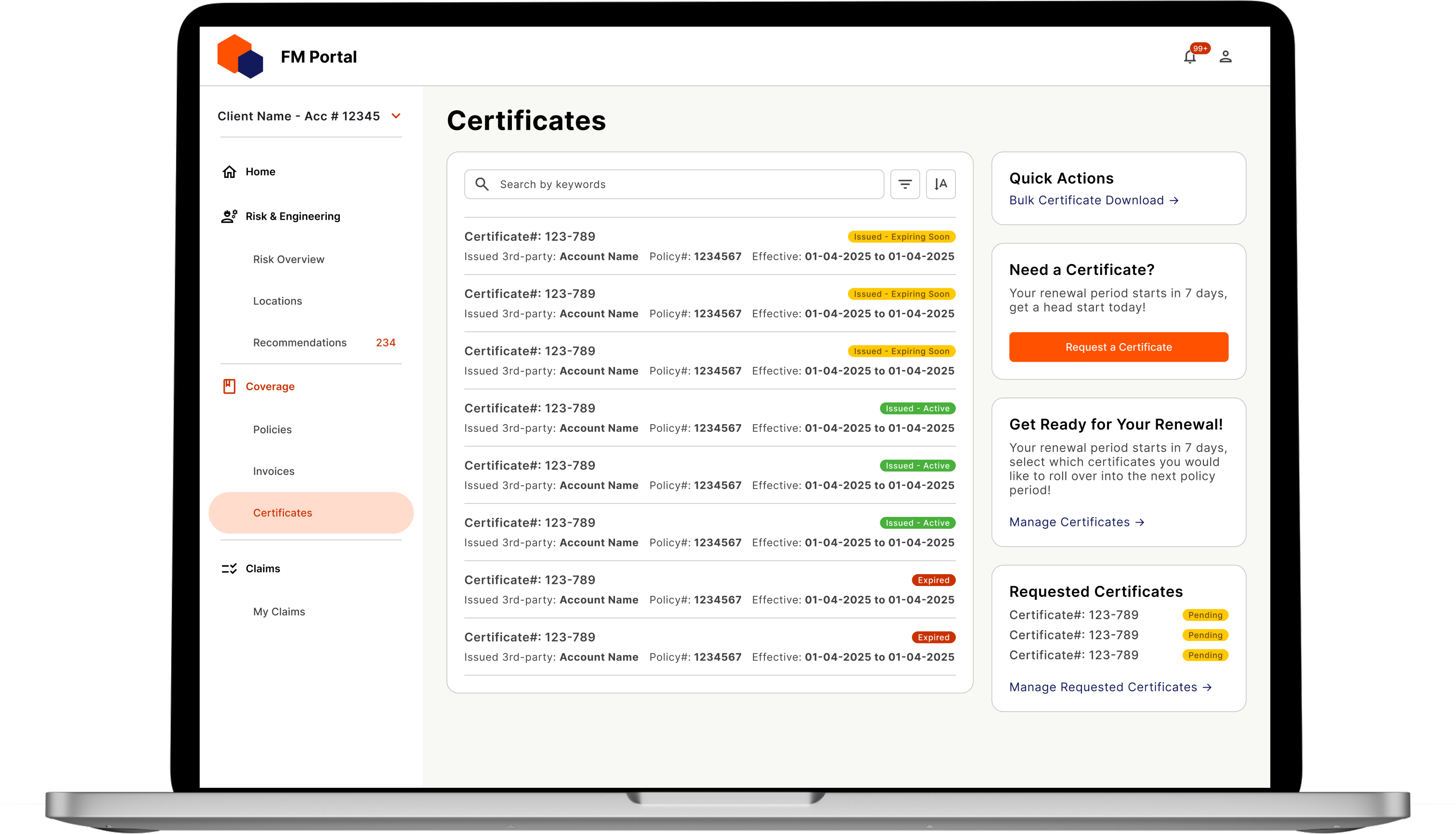
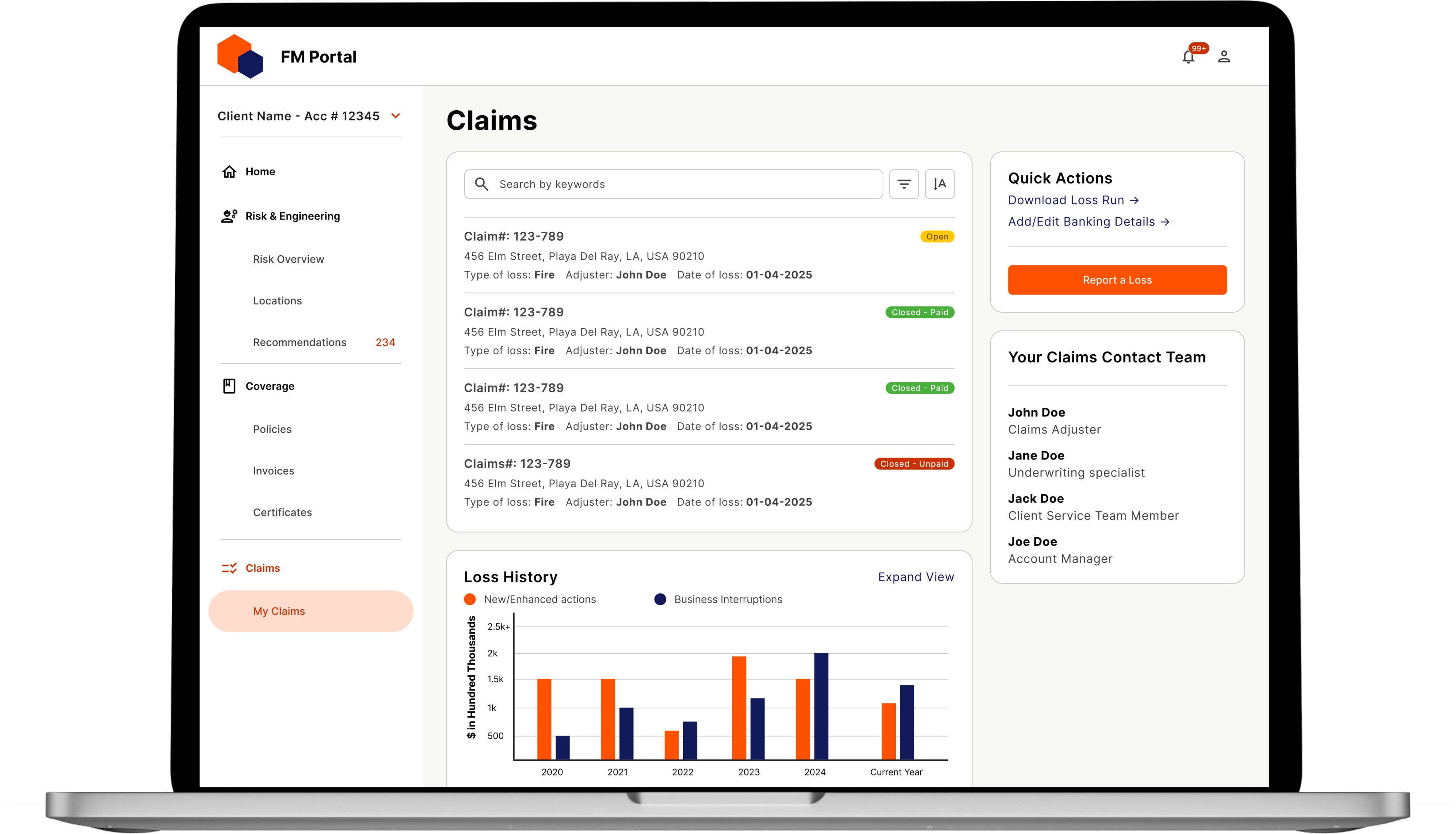
After multiple validation sessions and close partnership with engineering, we rolled out the final concept: a smart, self-service portal with responsive, modular components that adapt to different client needs.
Clients could now see real-time risk updates, access site visit outcomes, and request certificates — all without needing to send a single email. Internally, the platform improved transparency, reduced support burden, and laid the foundation for future product unification.
Client Follow-up delays
- 30%
Visibility into risk action items
+60%
25 Pilot Accounts, to
2,500+
clients
Leadership Testimonials
This project was a turning point in my evolution as a design leader. Beyond creating better flows and cleaner UI, I learned how to lead a complex initiative across multiple teams with competing priorities, and still deliver a solution that made an immediate impact.
I had to balance business constraints, technical feasibility, and user needs while keeping everyone aligned on a shared vision. I drove workshops, challenged assumptions, made space for cross-functional voices, and pushed for simplicity where complexity had been the norm. Through it all, I stayed deeply involved in the design craft while guiding team members, influencing leadership, and advocating for users at every step.
Most importantly, I saw how great UX leadership isn’t about owning the solution, it’s about creating clarity, building trust, and empowering teams to move forward together.
...and this is the energy I bring to every challenge.
let’s work together!
Built on figma sites
Resume
Client Portal
Empowering Clients Through Seamless Risk Management
Role
Lead UX Designer
Company
Factory Mutual Insurance Company
Timeline
Mutli-year
2021 - Ongoing
Responsibilities
UX leadership, Vision Creation, Cross-Functional Alignment, Design Execution, System Thinking
Product
Enterprise platform enabling collaboration between clients and field engineers
Team
5 Designers
2 Researcher
8 Product teams
I led UX strategy and design for a secure client-facing portal that helps users track risk, manage claims, and collaborate with field engineers. This project aimed to reduce fragmented workflows and empower clients with real-time, self-service access to their risk data — improving satisfaction and operational efficiency.
Unclear Access to Risk Data
It’s unclear where to find risk data or task updates
Communication is fragmented across emails, PDFs, and manual follow-ups
Lack of Collaboration & Visibility
There’s no easy way to track progress or collaborate with field engineers
This led to miscommunication, slow action on risk mitigation, and excessive time spent by client service teams chasing updates — all of which impacted satisfaction and scalability.
Frication Areas
-- Different platforms
-- Multiple points of contact
-- Multiple login credentials
-- Inconsistant experiences
-- Unsecured conversations via emails
-- Document exchange via emails
To kick off the effort, I was asked to define a product vision that could unite internal teams around solving these core experience gaps.
I led cross-functional workshops with product owners, field engineers, and client service leaders to align on the biggest friction points. We mapped user and business pain together, defined critical use cases, and prioritized where UX could drive the most value.
Once we had consensus on the vision, I worked with our research team to audit existing touchpoints — reports, claims, risk tracking, certificates, and identify where overlap, delays, and user drop-off were most common.
We discovered that several processes (like site visit follow-up or certificate access) existed across disconnected tools, lacked ownership visibility, and didn’t support real-time updates.
New/Enhanced actions
Current actions
To bring clarity, I proposed a new, role-based information architecture that aligned tasks around user intent — not internal structure.
I consolidated workflows into a modular dashboard experience with persistent risk tracking, task assignment, and documentation exchange. I also worked closely with our research partner to test terminology and flow concepts through tree testing and pilot sessions.
From there, I explored several layout and interaction patterns to support high-frequency tasks — from recommendation tracking to risk visualization.
I created interactive prototypes to evaluate layout hierarchy, notification styles, and mobile flexibility. Early concepts included a collapsible side panel for task switching, and an embedded chat thread for direct collaboration with engineers.
After multiple validation sessions and close partnership with engineering, we rolled out the final concept: a smart, self-service portal with responsive, modular components that adapt to different client needs.
Clients could now see real-time risk updates, access site visit outcomes, and request certificates — all without needing to send a single email. Internally, the platform improved transparency, reduced support burden, and laid the foundation for future product unification.
Client Follow-up delays
- 30%
+60%
25 Pilot Accounts, to
2,500+
clients
Leadership Testimonials
This project was a turning point in my evolution as a design leader. Beyond creating better flows and cleaner UI, I learned how to lead a complex initiative across multiple teams with competing priorities, and still deliver a solution that made an immediate impact.
I had to balance business constraints, technical feasibility, and user needs while keeping everyone aligned on a shared vision. I drove workshops, challenged assumptions, made space for cross-functional voices, and pushed for simplicity where complexity had been the norm. Through it all, I stayed deeply involved in the design craft while guiding team members, influencing leadership, and advocating for users at every step.
Most importantly, I saw how great UX leadership isn’t about owning the solution, it’s about creating clarity, building trust, and empowering teams to move forward together.
...and this is the energy I bring to every challenge.
let’s work together!
Built on figma sites
Resume
Client Portal
Empowering Clients Through Seamless Risk Management
Role
Lead UX Designer
Company
Factory Mutual Insurance Company
Timeline
Mutli-year
2021 - Ongoing
Responsibilities
UX leadership, Vision Creation, Cross-Functional Alignment, Design Execution, System Thinking
Product
Enterprise platform enabling collaboration between clients and field engineers
Team
5 Designers
2 Researcher
8 Product teams
Overview
The problem
Define
Ideation
Final Designs
I led UX strategy and design for a secure client-facing portal that helps users track risk, manage claims, and collaborate with field engineers. This project aimed to reduce fragmented workflows and empower clients with real-time, self-service access to their risk data — improving satisfaction and operational efficiency.
Unclear Access to Risk Data
It’s unclear where to find risk data or task updates
Fragmented Communication Channels
Communication is fragmented across emails, PDFs, and manual follow-ups
Lack of Collaboration & Visibility
There’s no easy way to track progress or collaborate with field engineers
This led to miscommunication, slow action on risk mitigation, and excessive time spent by client service teams chasing updates — all of which impacted satisfaction and scalability.
Frication Areas
-- Different platforms
-- Multiple points of contact
-- Multiple login credentials
-- Inconsistant experiences
-- Unsecured conversations via emails
-- Document exchange via emails
To kick off the effort, I was asked to define a product vision that could unite internal teams around solving these core experience gaps.
I led cross-functional workshops with product owners, field engineers, and client service leaders to align on the biggest friction points. We mapped user and business pain together, defined critical use cases, and prioritized where UX could drive the most value.
Once we had consensus on the vision, I worked with our research team to audit existing touch points for reports, claims, risk tracking, certificates, and identify where overlap, delays, and user drop-off were most common.
We discovered that several processes (like site visit follow-up or certificate access) existed across disconnected tools, lacked ownership visibility, and didn’t support real-time updates.
New/Enhanced actions
Current actions
To bring clarity, I proposed a new, role-based information architecture that aligned tasks around user intent — not internal structure.
I consolidated workflows into a modular dashboard experience with persistent risk tracking, task assignment, and documentation exchange. I also worked closely with our research partner to test terminology and flow concepts through tree testing and pilot sessions.
From there, I explored several layout and interaction patterns to support high-frequency tasks — from recommendation tracking to risk visualization.
I created interactive prototypes to evaluate layout hierarchy, notification styles, and mobile flexibility. Early concepts included a collapsible side panel for task switching, and an embedded chat thread for direct collaboration with engineers.
After multiple validation sessions and close partnership with engineering, we rolled out the final concept: a smart, self-service portal with responsive, modular components that adapt to different client needs.
Clients could now see real-time risk updates, access site visit outcomes, and request certificates — all without needing to send a single email. Internally, the platform improved transparency, reduced support burden, and laid the foundation for future product unification.
Client Follow-up delays
- 30%
Visibility into risk action items
+60%
25 Pilot Accounts, to
2,500+
clients
Leadership Testimonials
This project was a turning point in my evolution as a design leader. Beyond creating better flows and cleaner UI, I learned how to lead a complex initiative across multiple teams with competing priorities, and still deliver a solution that made an immediate impact.
I had to balance business constraints, technical feasibility, and user needs while keeping everyone aligned on a shared vision. I drove workshops, challenged assumptions, made space for cross-functional voices, and pushed for simplicity where complexity had been the norm. Through it all, I stayed deeply involved in the design craft while guiding team members, influencing leadership, and advocating for users at every step.
Most importantly, I saw how great UX leadership isn’t about owning the solution, it’s about creating clarity, building trust, and empowering teams to move forward together.
...and this is the energy I bring to every challenge.
let’s work together!
Built on figma sites
Resume